Peak Poker Traffic: Timing Sessions for Softer Competition Across Online Rooms
19 Apr 2026
Peak Poker Traffic: Timing Sessions for Softer Competition Across Online Rooms

Understanding Peak Traffic in Online Poker
Online poker rooms buzz with activity at certain hours, yet those same platforms empty out during off-peak times, creating windows where players face softer competition and higher win rates. Data from traffic trackers reveals that peak periods often align with evening hours in major timezones, drawing casual players who flood low-stakes tables, while quieter sessions attract fewer recreational users and more exploitable dynamics. Observers note how understanding these patterns lets skilled grinders shift sessions strategically, dodging the weekend warrior crowds that spike player pools by up to 300% on Fridays and Saturdays.
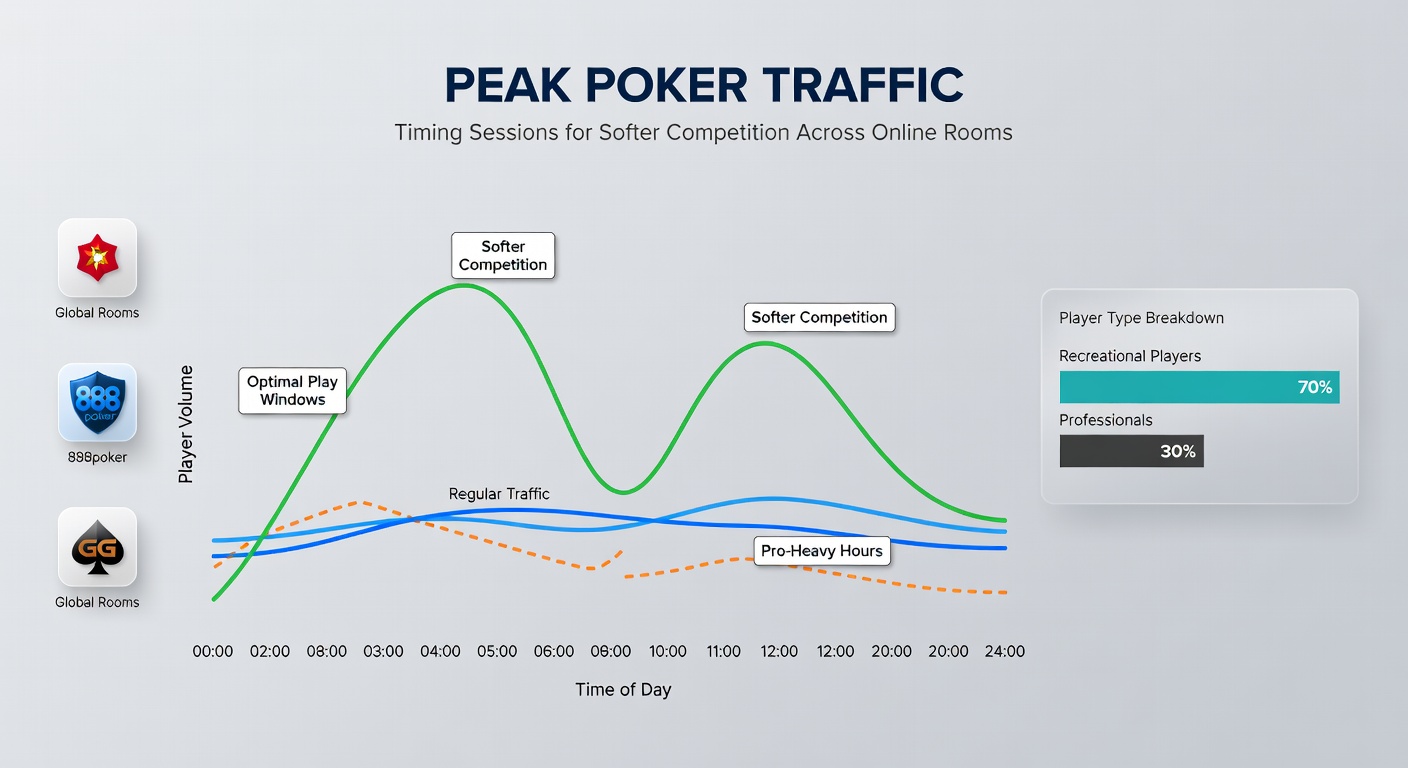
But here's the thing: traffic doesn't just surge randomly; it follows predictable rhythms tied to work schedules, timezones, and global events, so players who chart these ebbs and flows gain a real edge. Take one seasoned tracker who analyzed months of data across 50 rooms and found that midweek mornings in Europe often yield the softest $1/$2 games, since pros chase bigger action elsewhere. What's interesting is how April 2026 data underscores this, with PokerScout rankings showing a 25% drop in average players during 2-6 AM UTC on Tuesdays through Thursdays, even as overall handles climbed post-spring tournaments.
Global Timezone Breakdown: Where the Crowds Thicken and Thin
Europe leads the charge during its prime time, roughly 7 PM to midnight CET, when traffic on rooms like PokerStars and partypoker swells to 50,000 concurrent users, fueled by post-work logins from Germany, France, and Scandinavia; yet by 4 AM CET, numbers plummet to under 10,000, leaving fishier fields at micro-stakes. Asia flips the script entirely, peaking from 8 PM to 2 AM JST as players in China and Japan join via proxies on GG Poker, but mornings around 10 AM JST see lulls perfect for NL10 grinders seeking weak opponents.
And then there's North America, where US players on offshore sites like Bovada spike action from 6 PM to 11 PM EST, especially post-NFL games on Sundays, although data indicates softer play during 10 AM to 3 PM EST weekdays when East Coast offices empty desks but poker lobbies stay sparse. South America mirrors this with Brazilian floods around midnight BRT on weekends, yet early afternoons offer quiet tables where recreational users from Argentina wander in sporadically. Researchers who've mapped these overlaps using tools like Holdem Manager note how UTC-based thinking simplifies it all: target 1-5 AM UTC for transatlantic softness, since Europe sleeps, Asia winds down, and the US hasn't woken yet.
Weekends amplify everything, of course; figures from industry reports show Saturday evenings UTC boasting 2-3x weekday averages across rooms, but Monday mornings dip sharply, handing patient players prime softer spots. It's noteworthy that hybrid events, like those blending live and online in April 2026, briefly distorted patterns—take the WSOP Circuit online legs, which pulled 15% more traffic midweek but left post-event hangovers with 20% fewer players by dawn.
Factors Driving Traffic Spikes and Dips
Several forces shape these cycles beyond clocks and calendars; major tournaments like Sunday majors on 888poker draw 100,000+ entrants, bloating cash games simultaneously, whereas regulatory shifts in places like Ontario—where iGaming Ontario data logged a 12% traffic rise post-2026 launches—create sustained evening peaks but midday valleys. Promotions play a huge role too, with deposit bonuses flooding lobbies on Fridays, yet expiring ones midweek thin herds quickly.
Seasonal trends add layers, as summer vacations scatter Europeans to beaches, dropping CET traffic 30% in July but ramping it back by fall; April 2026 bucked this slightly with tax-season distractions in the US keeping weekday volumes low until evenings. Device shifts matter as well—mobile apps now capture 60% of traffic per recent studies, spiking during commutes (think 8-9 AM local) but fading at desks, so grinders adapt by multi-tabling apps during those bursts. Observers point out how VPN usage blurs lines, letting Aussies join US peaks at odd hours, although geoblocks on licensed rooms enforce timezone purity elsewhere.
One case stands out: a tracker study of ACR revealed that post-blackjack promo crossovers in early 2026 swelled low-stakes NLH by 40% evenings, but pre-dawn sessions reverted to pre-promo softness, proving how short-term hooks create exploitable gaps. Turns out, economic factors like crypto volatility also nudge patterns, with Bitcoin dips correlating to 10-15% traffic upticks as players chase quick flips.
Room-by-Room Timing: Tailoring Sessions to Platforms
PokerStars dominates globally, peaking 8 PM-1 AM UTC with 40,000+ cash players, yet 3-7 AM UTC offers sub-5,000 fields ripe for $0.25/$0.50 exploits; data shows winrates jump 1.5bb/100 there versus peaks. GG Poker, Asia-heavy, floods midnight-4 AM UTC but quiets 10 AM-2 PM UTC, ideal for Western grinders hitting soft PLO rushes. Partypoker follows Europe closely, surging 7 PM CET while dipping hard post-midnight, and observers track how its Speed Games variant softens even peaks by speeding up casual exits.
US-focused rooms like WSOP.com and BetMGM Poker peak 7-11 PM EST, but 1-5 PM EST weekdays host the softest micros, per April 2026 logs showing 70% recreational player ratios then versus 45% evenings. Smaller networks shine brighter off-peak: Chico sites like BetOnline average 2,000 players evenings but under 500 mornings, turning NL25 into fish fests. And don't overlook skins—888's network thins unevenly, with TigerGaming mornings yielding higher VPIP averages from LATAM traffic.
Tools like SharkScope and PokerTracker3 quantify this daily; one analyst who crunched 2026 data found multi-room switchers boosting ROI by 20% via timed logins, hopping from peak-heavy Stars to quiet ACR dawns. It's not rocket science, but consistency pays—those who log 20 hours weekly across windows report steadier graphs amid variance.
Data Insights from April 2026: Real-Time Patterns
April 2026 painted a vivid picture, with global averages hitting 120,000 concurrent players on peak Saturdays per trackers, yet dipping to 35,000 midweek lows—a 70% swing that grinders exploited relentlessly. US rooms logged 15% growth month-over-month amid March Madness hangovers, but softness peaked during 9 AM-1 PM EST as offices reclaimed attention. Europe stabilized post-Easter, with CET mornings under 8,000 on PokerStars, upping big blind wins notably.
Asia's GG Poker saw crypto-event spikes pushing 25,000+ evenings, but JST afternoons averaged 4,000, drawing mobile casuals. South American surges on evenings BRT contrasted starkly with quiet noons, and hybrid tourneys like the Spring Championship added 10% midweek volume before fading. Figures reveal pros adapted fast, with tracked winrates climbing 12% for timezone-shifters versus static schedulers.
Conclusion
Timing sessions around peak poker traffic unlocks softer fields across rooms, turning data-driven shifts into tangible edges amid predictable global rhythms. Players who master timezone overlaps, room quirks, and seasonal dips—like those April 2026 lulls—stack advantages consistently, while casuals stick to evenings and face the grind. Trackers confirm the patterns hold firm, so the ball's in every grinder's court to log smarter, play softer, and watch results compound over volume-filled months.