Mapping User Migration Patterns Between Traditional and Virtual Poker Environments
Written by Hugo Schmid · Aug 25, 2026
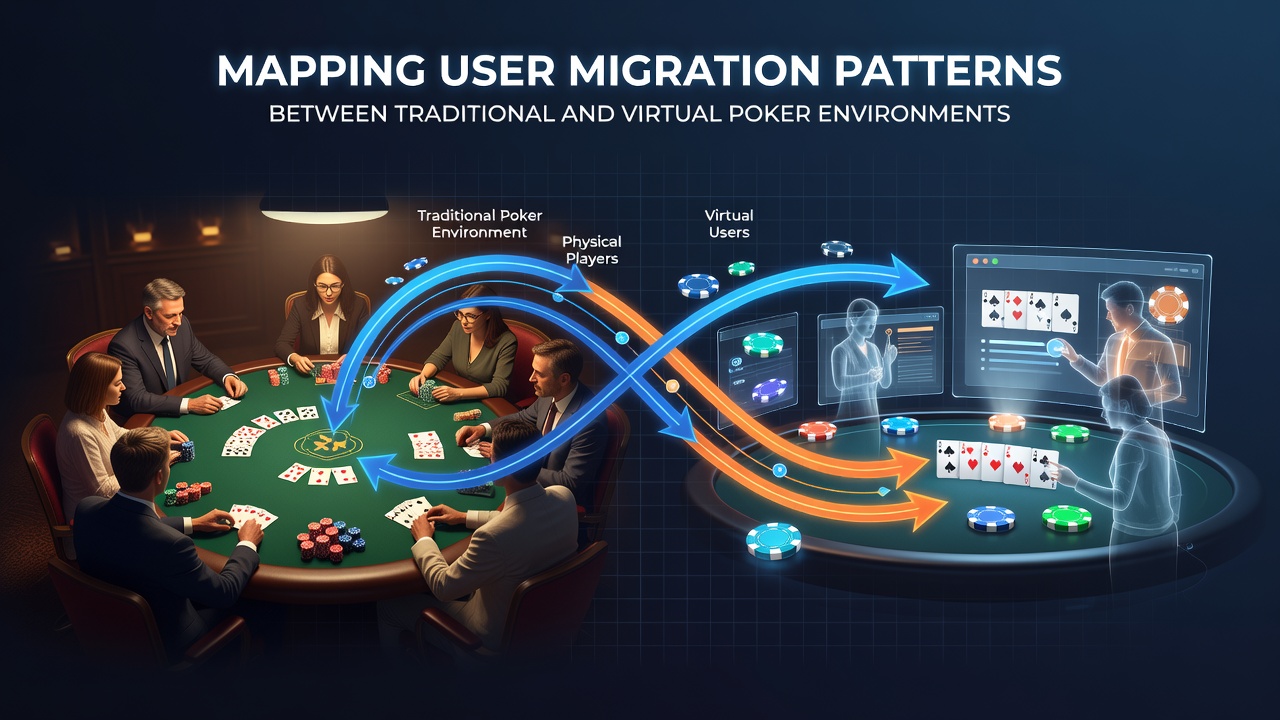
Mapping User Migration Patterns Between Traditional and Virtual Poker Environments
Traditional poker rooms in casinos have long served as central hubs for social interaction and high-stakes play, yet virtual platforms have drawn increasing numbers of participants since the mid-2010s. Researchers tracking these shifts note steady movement between physical venues and digital interfaces, with patterns influenced by accessibility, regulatory changes, and technological upgrades. Data collected through player tracking systems reveals that many users alternate between environments rather than committing exclusively to one format, creating complex migration flows that operators monitor closely.
Historical Context of Poker Participation
Live poker experienced a surge after the 2003 World Series of Poker boom, when television coverage brought the game to wider audiences and drove foot traffic into casinos across North America and Europe. Virtual rooms expanded rapidly in the following decade, though regulatory crackdowns in certain markets slowed growth until licensing frameworks stabilized. By 2020, the global shift toward remote activities accelerated virtual adoption, with figures from industry reports showing online poker traffic rising sharply while casino floor counts dipped temporarily. Observers tracking these trends point to overlapping user bases that maintain profiles in both settings, allowing seamless transitions based on schedule and preference.
Key Drivers of Migration Between Formats
Convenience stands out as a primary factor, since virtual tables operate around the clock without travel requirements, while traditional rooms offer tactile card handling and direct opponent observation. Economic elements also play roles, with rake structures and bonus incentives varying across platforms and influencing where players concentrate their volume. Studies conducted by academic groups in Canada and Australia indicate that younger demographics gravitate toward digital options during weekdays, whereas established players return to live settings for major tournaments on weekends. Regulatory updates in multiple jurisdictions further shape these movements, as licensing expansions in some regions open new virtual markets while tightening oversight in others.
Biometric integrations and app-based loyalty programs have begun bridging the two environments, letting users carry progress and preferences across both. One analysis of transaction data found that participants who started in virtual rooms during 2021 often visited physical casinos within two years, drawn by live event calendars. Conversely, casino regulars adopted online play during periods of restricted venue access, establishing habits that persisted afterward.
Data Patterns Observed Through 2026
Tracking services and operator reports compiled through August 2026 show consistent cross-environment activity, with roughly 35 percent of tracked players maintaining accounts in both traditional and virtual settings. Migration spikes align with major live tournament schedules, such as those in Las Vegas and Macau, where online volume dips temporarily as participants relocate for events. Figures released by the Nevada Gaming Control Board highlight steady live poker revenue alongside parallel growth in state-licensed online variants, suggesting complementary rather than competitive dynamics.
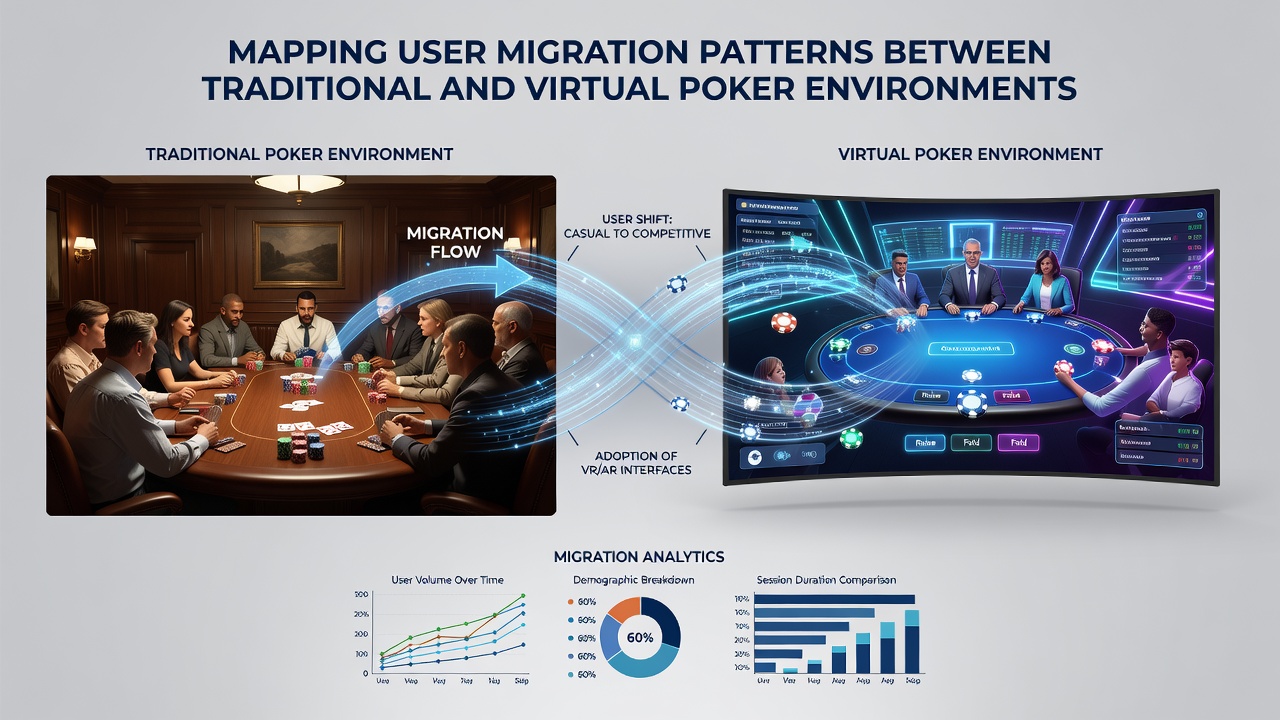
Regional variations appear pronounced. North American markets display higher rates of hybrid participation, while European data points to stronger virtual retention among recreational players. Australian research institutions have documented similar patterns, noting that regulatory clarity in digital licensing correlates with reduced leakage between formats. These observations come from aggregated session logs rather than individual tracking, preserving privacy while revealing broader flows.
Challenges in Accurate Pattern Mapping
Multiple account usage and VPN access complicate precise measurement, as users sometimes obscure their primary environment. Operators address this through device fingerprinting and behavioral analytics that identify consistent play styles across sessions. Privacy regulations in the EU and elsewhere limit the granularity of shared datasets, prompting reliance on anonymized aggregates from trade associations. Despite these hurdles, collaborative efforts among research bodies have produced increasingly reliable models that forecast migration based on time of year and promotional calendars.
Case Examples from Recent Years
Take one operator network that launched synchronized loyalty rewards in 2024, linking live casino play with online points redemption. Participant logs showed a 22 percent increase in cross-format activity within the first year, according to internal metrics shared with industry groups. Another example involves a North American casino group that introduced hybrid satellite tournaments feeding directly into virtual main events, resulting in measurable upticks in both live attendance and online registration numbers. These initiatives demonstrate how targeted features can channel existing users between environments without forcing exclusive commitment.
Future Outlook and Ongoing Research
Emerging technologies such as augmented reality overlays for virtual tables may further blur distinctions, encouraging additional movement as players seek immersive experiences regardless of setting. Regulatory bodies in multiple regions continue refining frameworks that accommodate both formats, with recent August 2026 updates in several states focusing on responsible play tools that function across platforms. Continued data collection from sources including university-led studies and gaming association surveys will refine understanding of these patterns, helping stakeholders anticipate volume shifts tied to economic conditions and technological adoption rates.
Conclusion
Mapping user migration between traditional adn virtual poker environments requires ongoing analysis of behavioral, economic, and regulatory factors that drive participation choices. Available evidence indicates sustained hybrid engagement rather than wholesale replacement of one format by the other, with operators adapting through integrated tools and cross-platform features. As datasets expand and analytical methods improve, clearer pictures of these flows will support more precise planning across the poker sector.