How Seasonal Fixture Congestion Alters Accumulator Construction Patterns in European Football Leagues
Written by Sage Becker · Aug 18, 2026
How Seasonal Fixture Congestion Alters Accumulator Construction Patterns in European Football Leagues
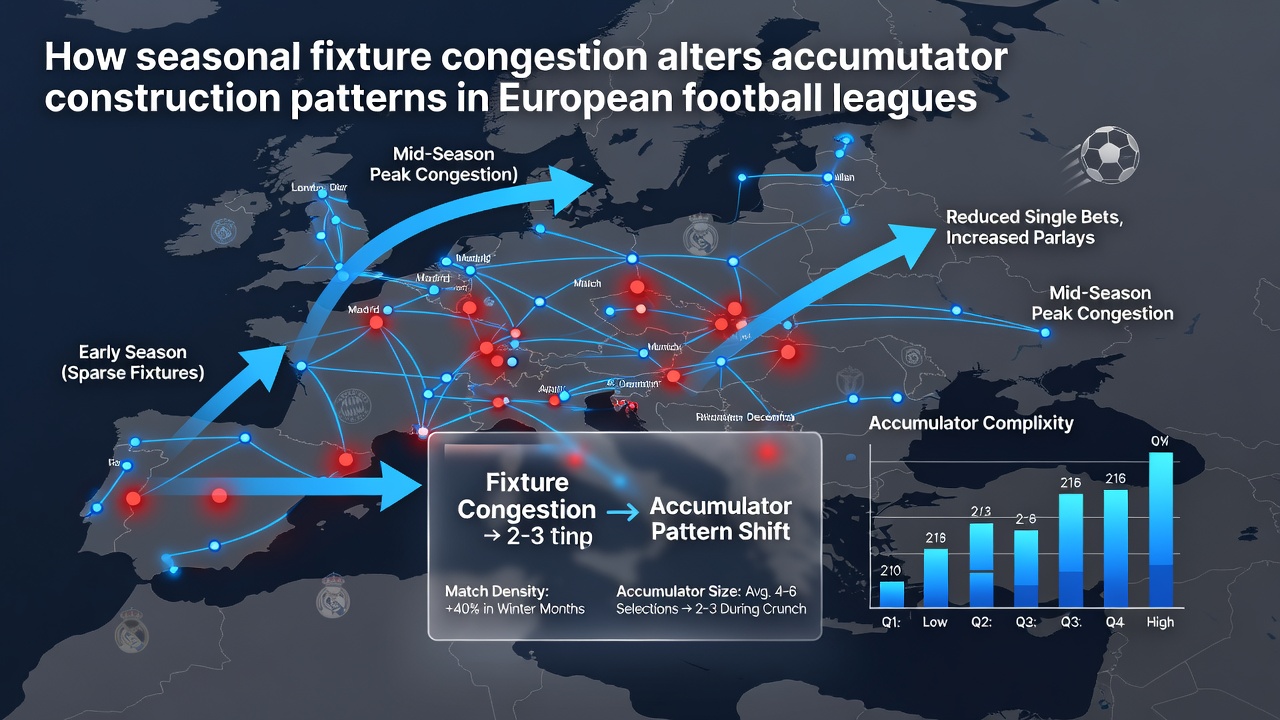
Fixture congestion in European football leagues creates measurable shifts in how accumulators get built because overlapping domestic cups, European competitions, and national team breaks force teams into tighter schedules that affect player availability and match outcomes. Data from major leagues shows these periods, which peak between December and March each season, lead bettors to adjust selections away from high-volume win bets toward draws, under totals, and squad rotation indicators. Observers note that August 2026 marks the start of the 2026/27 campaign where early scheduling already signals similar pressures for clubs competing on multiple fronts.
Understanding Fixture Congestion in Context
European leagues schedule matches across domestic competitions while clubs participate in UEFA Champions League, Europa League, and Conference League events, which produces clusters of games with recovery windows under 72 hours. Researchers tracking performance metrics have documented that teams playing three matches in eight days record higher rates of draws and lower scoring outputs compared to standard weekly schedules. This pattern emerges because fatigue influences key areas such as set-piece defense and attacking transitions, factors that directly feed into accumulator selections built around over/under goals or both-teams-to-score markets.
Performance Data During Congested Periods
Statistics compiled across the Premier League, Bundesliga, La Liga, and Serie A reveal consistent trends where teams involved in European midweek fixtures see their win percentages drop by several points in subsequent league games. One analysis from the European Club Association highlighted that rotation of starting lineups increases during these windows, which in turn correlates with more cautious accumulator constructions that favor selections on clean sheets or low-scoring outcomes. Bettors who monitor squad news adjust their multi-leg bets accordingly, often replacing outright win legs with draw or under-2.5 goals options to account for the statistical likelihood of stalemates.
What's interesting is how these adjustments appear across different leagues at varying intensities. Bundesliga clubs, for instance, face additional travel demands due to geographic spread, while Serie A sides encounter fixture pile-ups around Coppa Italia rounds. A study conducted by researchers at the University of Amsterdam examined match logs from five seasons and found that accumulators built with heavy emphasis on favorite wins underperform during congestion peaks, prompting shifts toward value selections on mid-table sides playing at home after European travel.
Accumulator Construction Adjustments Observed
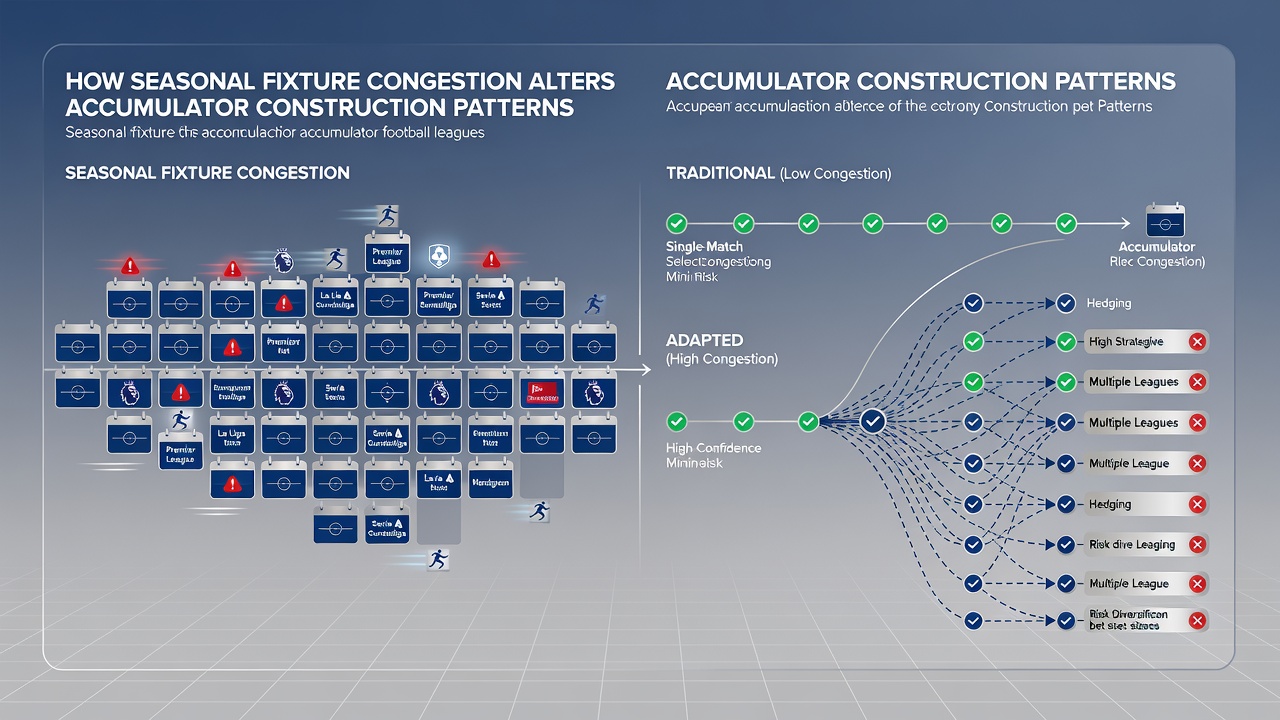
Market data indicates that during congested months, the proportion of accumulators including draw selections rises notably compared to non-congested periods. This occurs because historical results show away teams in European competition often settle for points rather than pushing for wins in follow-up league fixtures. Constructors respond by layering in legs focused on under totals or Asian handicap draws, which provide coverage against the variance introduced by tired squads. Those who track these patterns also incorporate player absence data from official league announcements to refine their multi-leg structures, avoiding selections on sides missing key midfielders or fullbacks due to accumulated bookings or minor injuries.
Turns out the timing of these changes aligns closely with specific calendar windows. The Christmas and New Year period in England produces the most pronounced effects in the Premier League, whereas La Liga experiences overlaps tied to winter Copa del Rey ties. Figures from betting operators show increased volume in accumulator bets that mix one or two draw legs with under goals selections, reflecting the data-driven response to congestion metrics published by league statisticians. External factors such as weather in northern Europe during January further compound recovery challenges, leading to additional emphasis on defensive betting angles.
League-Specific Patterns and Examples
In the Bundesliga, clubs like Bayern Munich and Borussia Dortmund that advance deep in European competitions demonstrate measurable drops in goal difference during league matches scheduled within four days of Champions League ties. Accumulator builders respond by favoring selections on their opponents to keep clean sheets or targeting low total goals in those fixtures. Similar dynamics appear in Serie A around Juventus and Inter Milan schedules, where Coppa Italia commitments create midweek clusters that alter the typical high-scoring nature of certain derbies. One report issued by the German Football Association noted that fixture lists released for the 2025/26 season already flagged potential congestion points that carried into planning for August 2026 restarts.
People who construct accumulators regularly incorporate rotation risk assessments drawn from club press conferences and training reports. This approach leads to fewer legs built around star player goalscorer props and more focus on team-level outcomes such as double chance or draw no bet options. Evidence from multiple seasons demonstrates that such adaptations maintain accumulator viability even when individual team performances fluctuate due to schedule density.
Conclusion
Seasonal fixture congestion produces clear, data-supported changes in accumulator construction across European football leagues as bettors adapt to performance variances tied to recovery time and squad management. Patterns documented through league statistics and performance tracking show consistent movement toward draw-inclusive and under-total selections during peak overlap periods. These adjustments reflect the integration of scheduling data into betting decisions, allowing multi-leg structures to account for the realities of modern club calendars that extend from August through May.